Tehran strikes back at Gulf states after U.S.-Israel attack Irannomadictrails
Follow CNBC’s live coverage of the U.S.-Israel strikes in Iran
The U.S. military has begun “major combat operations” in Iran, U.S. President Donald Trump confirmed on Saturday, as Iranian missiles targeted several Middle Eastern cities.
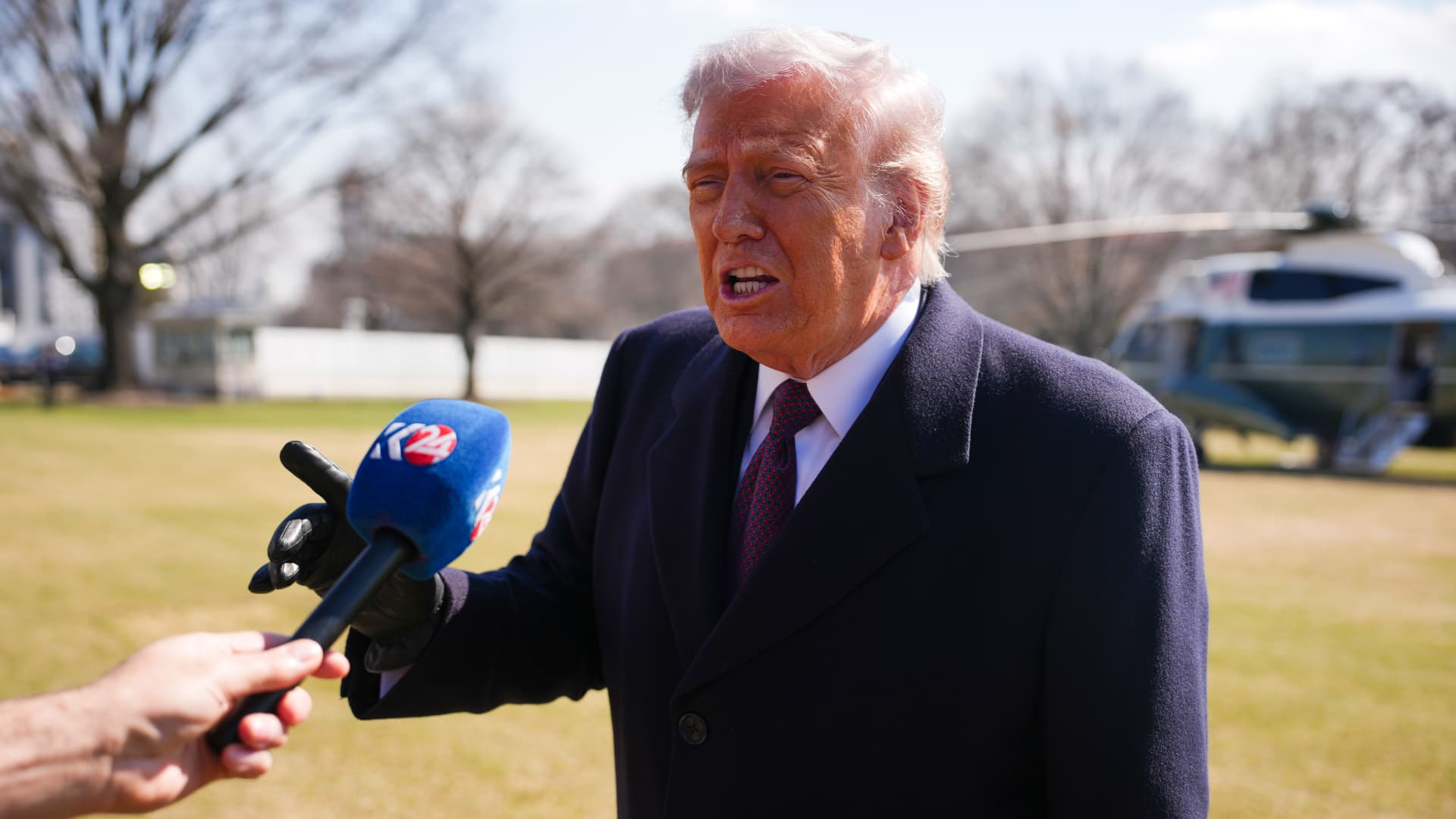
“Our objective is to defend the American people by eliminating imminent threats from the Iranian regime, a vicious group of very hard, terrible people,” Trump said in a video message on his Truth Social account.
A U.S. official confirmed earlier that American forces attacked Iran by air and sea, Reuters reported. It also cited an unidentified Iranian official as saying that several ministries in the southern part of the Iranian capital, Tehran, were targeted
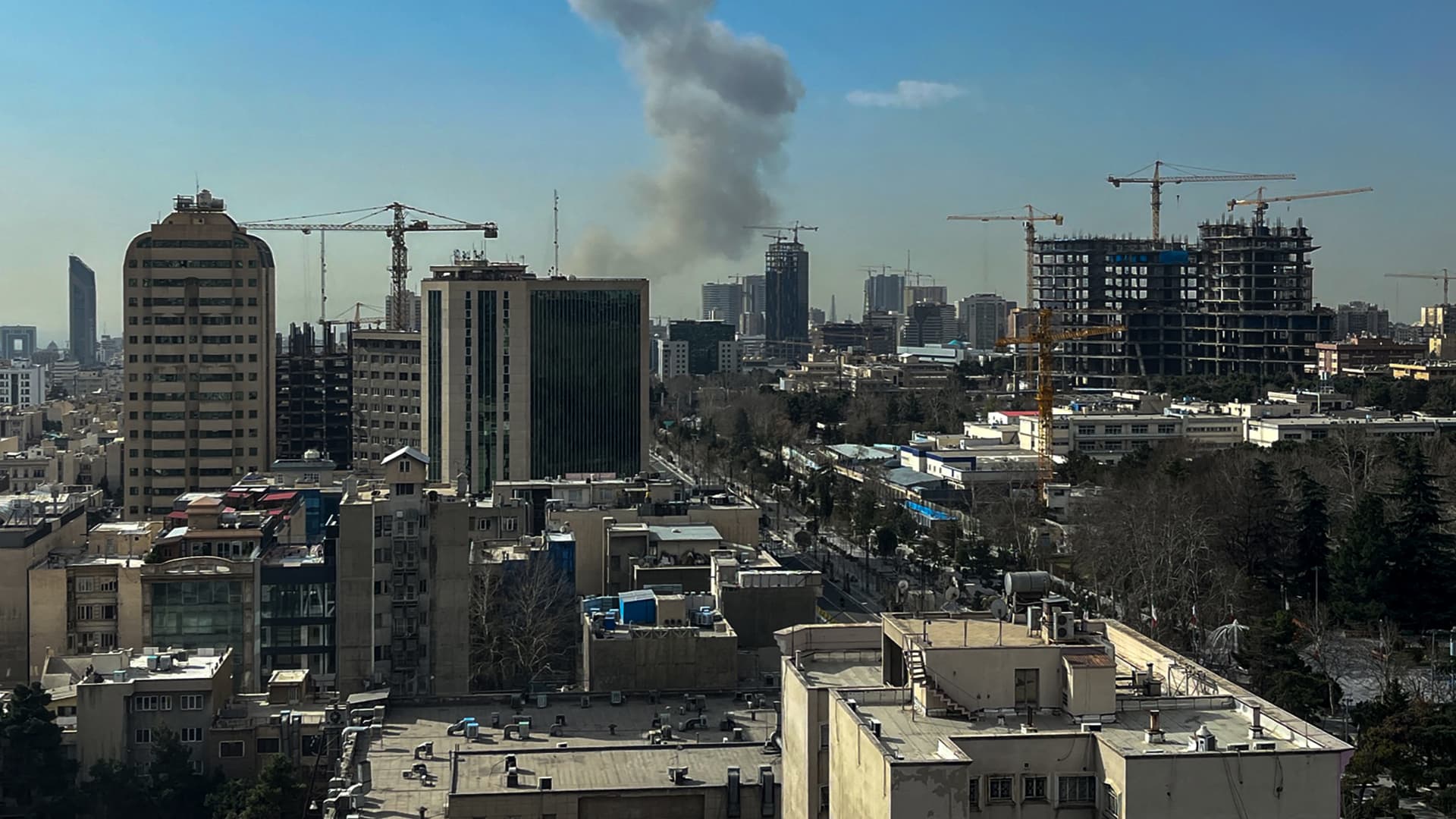
Israel also launched a Saturday attack on Iran’s capital, with a cloud of smoke rising from the city’s downtown.
Explosions were heard in key cities around the Middle East, including Jerusalem, as Iran launched counterattacks. CNBC producer Joan Muwahed in Dubai reported hearing two explosions over the city in the United Arab Emirates.

Qatar and the UAE condemned Iranian missile counterattacks.
“The State of Qatar expresses its strong condemnation of the targeting of Qatari territory with Iranian ballistic missiles, considering it a flagrant violation of its national sovereignty,” Qatar’s Ministry of Defense said in a statement.
A UAE statement said: “the Ministry of Defense announced that the country was subjected today to a blatant attack by Iranian ballistic missiles, which was dealt with by the UAE air defenses with high efficiency and a number of missiles were successfully intercepted.”
The Israel Defense Forces said it had identified missiles launched from Iran toward Israel.
“Defensive systems are operating to intercept the threat. In the past few minutes, the Home Front Command has sent a precautionary directive directly to mobile phones in the relevant areas,” the IDF said in a tweet.

Elsewhere, Bahrain said the service center of the U.S. Fifth Fleet was subjected to a missile attack. The U.S. embassy in Bahrain’s capital, Manama, issued a security alert warning of “imminent drone/missile attack in Bahrain”.
In a tweet, the embassy urged “U.S. citizens in Bahrain to shelter in place, review security plans in the event of an attack, and to stay alert in case of additional future attacks. U.S. Embassy personnel are sheltering in place.”
The U.S. embassy in Abu Dhabi, the capital of the United Arab Emirates, also issued a shelter-in-place alert.
Failed negotiations?
The Saturday attacks come after the United States had assembled a vast fleet of fighter jets and warships in the region in an effort to pressure Iran into a deal over its nuclear program.
Trump warned earlier in February that “really bad things” would happen unless Tehran agreed to a nuclear deal. The U.S. and Iran held a third round of talks in Switzerland on Thursday to try to resolve a standoff.
Ahead of the discussions, U.S. Secretary of State Marco Rubio said Iran’s reluctance to talk about its ballistic missile development program, alongside its nuclear program, was a “big, big problem.” Iran had said it was willing to compromise when it came to its nuclear program, but had repeatedly said Tehran’s missile program had never been part of the talks’ agenda.

However, Trump said Iran has continued to pursue nuclear weapons despite ongoing negotiations to end its program.
“[In] Operation Midnight Hammer last June, we obliterated the regime’s nuclear program at Fordow. And Isfahan. After that attack, we warned them never to resume their malicious pursuit of nuclear weapons, and we sought repeatedly to make a deal,” Trump said. “But Iran refused.”
“Instead, they attempted to rebuild their nuclear program and to continue developing the long range missiles that can now threaten our very good friends and allies in Europe, our troops stationed overseas and could soon reach the American homeland,” he said.
In addition to the capital Tehran, the cities of Isfahan, Qom, Karaj and Kermanshah were targeted.
Anadolu | Anadolu | Getty Images
A Pentagon duty press officer said the department has received CNBC’s emailed requests for comment but made no further statement.
A senior Middle East diplomat who has direct knowledge of the recent talks between Iran and the U.S. told MS Now: “Yet again, when negotiations get close to success … Israel has intervened to preempt diplomacy.”
Israeli Prime Minister Benjamin Netanyahu thanked Trump for “his historic leadership” and said that Iran’s government “must not be allowed to arm itself with nuclear weapons that would enable it to threaten all of humanity.”
Iran, meanwhile, harshly condemned the attacks, accusing the U.S. and Israel of “grossly violating” Iran’s territorial integrity and national sovereignty.
‘Grave consequences’
French President Emmanuel Macron said the outbreak of war between the U.S., Israel and Iran carries “grave consequences.”
“The ongoing escalation is dangerous for all. It must stop. The Iranian regime must understand that it now has no other option but to engage in good faith in negotiations to end its nuclear and ballistic programs,” Macron said, and called for an “urgent” meeting of the United Nations Security Council.
Russia was unequivocal in its condemnation of the U.S. and Israeli strikes.
“It is particularly reprehensible that these strikes are once again being conducted under the cover of the renewed negotiation process, ostensibly intended to secure long-term normalisation of the situation around the Islamic Republic of Iran,” Russia’s Foreign Ministry said in a statement.
This combination of pictures created on April 09, 2025 shows US Middle East envoy Steve Witkoff after a meeting with Russian officials at Diriyah Palace, in Riyadh, Saudi Arabia, on February 18, 2025 (L); and Iran’s Foreign Minister Abbas Araghchi speaking to AFP during an interview at the Iranian consulate in Jeddah on March 7, 2025.
Evelyn Hockstein | Amer Hilabi | AFP | Getty Images
Energy market participants have been closely monitoring the escalating geopolitical tensions, with oil prices climbing to six-month highs after Trump said he was considering a military strike against Iran.
Iran, a founding member of OPEC, is a major oil producer and sits at the heart of the strategically vital Strait of Hormuz, through which about 20% of the world’s oil passes.
— Riya Bhattacharjee, Victor Loh and Emma Graham contributed to this story


Post Comment